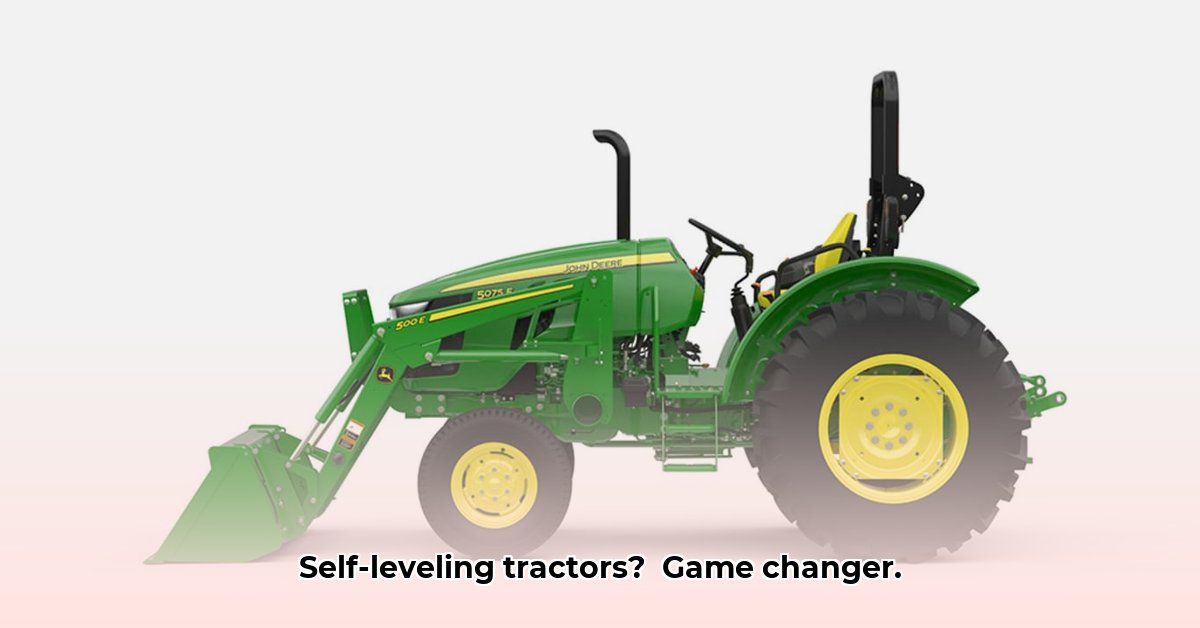
Loading Tractor Efficiency: John Deere Self-Leveling Loaders
Want to streamline your farm operations and boost your bottom line? John Deere's self-leveling loaders offer a compelling solution for increasing efficiency and reducing waste in sustainable agriculture. This comprehensive guide explores the technology, benefits, drawbacks, and implementation strategies for these innovative machines, empowering you to make an informed decision about their suitability for your farm. For more information on John Deere tractors, check out this helpful resource.
How Self-Leveling Loaders Work: The Magic Behind the Machine
John Deere self-leveling loaders utilize advanced hydraulic systems and sensors to automatically maintain a level bucket, regardless of the tractor's angle on uneven terrain. This eliminates the constant manual adjustments required with traditional loaders, significantly reducing operator fatigue and improving precision. The system automatically compensates for changes in the tractor's position, ensuring a consistent, level bucket for efficient material handling. Think of it as a sophisticated balancing act, all automated for optimal performance.
Benefits of Self-Leveling Loaders: More Than Just a Fancy Feature
Self-leveling loaders deliver tangible benefits that directly impact farm productivity and profitability. These advantages extend beyond simple convenience, offering quantifiable improvements in various aspects of farm operations.
Productivity Powerhouse
Self-leveling loaders significantly accelerate loading and unloading cycles. Farmers frequently report a substantial increase in material moved per unit of time, leading to higher overall output and increased efficiency. This translates to more work accomplished within the same timeframe. How much time do you spend manually leveling your bucket each day?
Precision is Key
The consistently level bucket minimizes spillage and ensures accurate placement of materials. This precision reduces waste and optimizes resource utilization, resulting in direct cost savings. This precision is critical for efficient use of valuable resources such as fertilizers and animal feed. What percentage of your materials are currently lost due to spillage?
Operator Comfort and Safety
By automating the leveling process, self-leveling loaders drastically reduce operator strain and fatigue. This improves operator comfort and significantly decreases the risk of accidents associated with awkward bucket maneuvering. A safer, more comfortable workplace leads to higher worker morale and retention. Have you experienced back injuries or operator fatigue due to manual bucket leveling?
Fuel Efficiency
While not guaranteed across all operations, many farmers report improved fuel economy due to smoother, more efficient loading cycles. The reduced need for constant corrections optimizes fuel consumption and contributes to lower operating costs. What is your current fuel consumption per loading cycle?
Drawbacks and Limitations: A Realistic Look
While the advantages are significant, it's crucial to acknowledge potential limitations. A balanced assessment of both benefits and drawbacks enables a well-informed decision.
Higher Initial Investment
Self-leveling loaders command a higher initial purchase price compared to standard loaders. However, a comprehensive cost-benefit analysis comparing the long-term savings against the initial investment is essential.
Terrain Challenges
While exceptionally adept on relatively level ground, their self-leveling capabilities might be less effective on extremely uneven or rocky terrain, potentially impacting efficiency in such conditions.
Maintenance Matters
The sophisticated hydraulic systems necessitate a more rigorous maintenance schedule compared to traditional loaders. Regular servicing and preventative maintenance are crucial for optimal performance and longevity.
Cost-Benefit Analysis: Will it Pay Off?
The decision to invest hinges on a careful cost-benefit analysis. This involves comparing the initial investment with the projected long-term savings. Factors to account for include:
- Purchase Price: Obtain quotes from dealers, considering various models and financing options.
- Operating Costs: Estimate fuel consumption, maintenance, and repair expenses.
- Labor Savings: Quantify the reduction in operator time and effort.
- Reduced Material Waste: Estimate the savings from decreased spillage and waste.
Utilize the provided ROI framework (see below) to determine the financial viability of the investment for your specific farm operations. Remember to factor in variables such as your farm size, workload, and material handling needs.
Implementation Guide: Making the Most of Your Investment
This section provides a step-by-step implementation guide to ensure the successful integration of a self-leveling loader into your farm operation:
Needs Assessment: Thoroughly evaluate your farm's material handling needs (volume, weight, types of materials). Select a loader model compatible with your requirements and terrain conditions.
Financing Options: Explore financing options such as loans or leasing to manage the initial investment. Consult with your John Deere dealer to learn about available programs.
Operator Training: Provide comprehensive training to operators on safe operation and preventative maintenance. John Deere often provides training programs or resources for dealerships.
Maintenance Scheduling: Establish a regular maintenance schedule, adhering to the manufacturer's recommendations. Preventative maintenance minimizes costly repairs and extends equipment life.
Safety Protocols: Implement strict safety procedures for loader operation, emphasizing safe handling of large loads and machine operation.
Conclusion: Weighing the Pros and Cons
John Deere self-leveling loaders offer substantial advantages in efficiency, precision, and operator well-being. However, the higher initial cost and maintenance requirements necessitate a detailed cost-benefit analysis tailored to your individual farm's operational context. By carefully considering all factors and following the implementation guide, you can maximize the benefits of self-leveling loaders and achieve enhanced sustainability and farm productivity. Remember, a well-informed decision leads to significant long-term returns.
Next Steps:
Contact your local John Deere dealer for a consultation, demonstration, and a tailored cost-benefit analysis. Explore available financing options and thoroughly research different models to identify the best fit for your farm's specific requirements. Don't hesitate to seek expert advice — it's a valuable investment.
How to Calculate ROI for John Deere Self-Leveling Loaders in Sustainable Farming
Key Takeaways:
- Self-leveling loaders significantly enhance efficiency and minimize waste, aligning with sustainable farming practices.
- Accurate ROI calculation requires careful consideration of initial investment, operational costs, labor savings, and fuel efficiency gains.
- Effective implementation, including comprehensive operator training and adherence to a robust maintenance schedule, is essential for maximizing ROI.
- John Deere provides valuable resources to assist in ROI estimation and equipment selection.
ROI Calculation Framework: A Step-by-Step Guide
Initial Investment: This includes the loader's purchase price, any necessary modifications, and installation costs.
Annual Operational Costs: Account for fuel, maintenance, repairs, and operator labor costs.
Annual Savings: Estimate savings from increased efficiency (time saved), reduced material waste, and potential fuel economy improvements. Convert these savings into monetary values.
Annual Net Profit: Calculate the difference between annual savings and annual operating costs.
ROI Calculation: Use the formula:
ROI = (Net Profit / Initial Investment) x 100Break-Even Point: Determine the number of years required for cumulative net profits to equal the initial investment. This indicates the timeframe for recouping your investment.